Swamp cooler spring start-up and pad change
An evaporative cooler sat dry all winter. Fresh pads, a clean pan and clear water lines get it ready for the dry heat of spring.
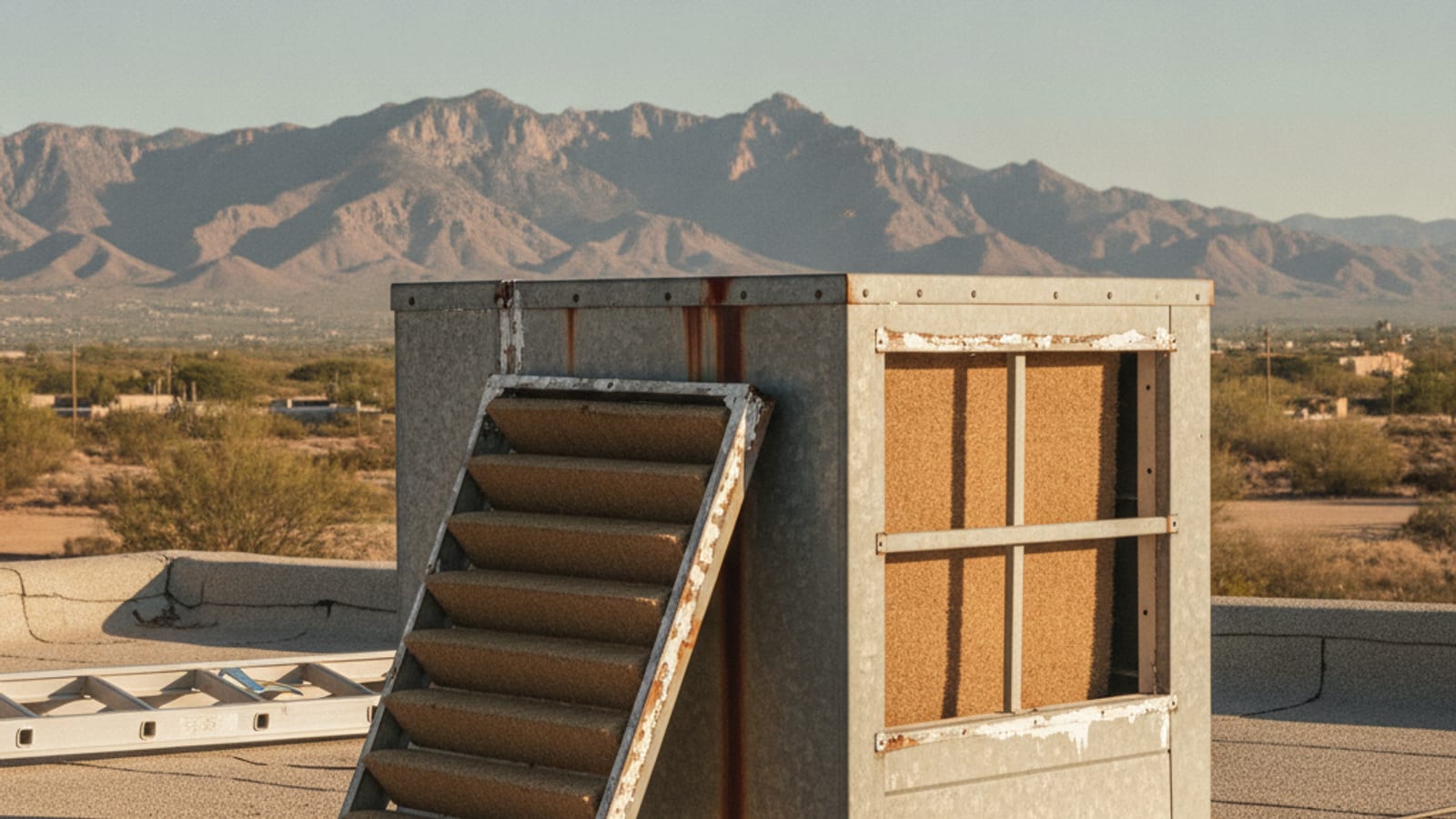
What to watch for: This is a side-draft cooler with doors. A down-draft roof cooler has the same parts in a different box. He oils bearings that have oil ports; sealed bearings get none.
Why does this matter in Tucson?
Tucson Water says the area's hard water, which comes mainly from mixing hard groundwater with Central Arizona Project water, builds calcium deposits in evaporative coolers. It advises changing swamp cooler pads regularly and adding an in-line filter.
Evaporative cooling depends on dry air. At the airport, average dew points sit in the 20s for most of the year and jump into the high 50s in July and August, which is why a cooler that feels great in May fades once the monsoon humidity arrives.
This guide is homeowner information. Climate Pros Tucson doesn't arrange evaporative cooler service. If you're weighing a switch to refrigerated air, that's where the pros we send come in.
What you'll learn
- Why Tucson water scales a cooler, and what Tucson Water advises
- How to swap pads and check that water covers them evenly
- The float, distributor lines, belt and bleed-off: what to look at
- Why a cooler loses its punch in July and August
How do you do it, step by step?
- Turn the cooler off at its wall switch and unplug the pump and motor at the unit. Close the water supply valve.
- Remove the side panels. Pull out the old pads and the retaining wires or clips.
- Scrape and rinse scale and debris out of the pan. Vacuum out the standing water and sludge.
- Check the panels and louvers for rust holes. Fit new pads of the type and size your cooler takes, tucked up under the water distributors.
- Clear the distributor lines and holes with a thin wire so water spreads across the full pad.
- Install the drain plug, open the water supply and check that the float shuts the water off below the overflow.
- Check the belt for cracks and tension, and oil the motor and blower bearings only if they have oil ports (follow the label).
- Plug in and run the pump alone first. Watch that every pad soaks evenly, then start the fan. Check that the bleed-off line drips.
When should you stop and call a pro?
- Your cooler sits on the roof and you’re not steady on a ladder or roof. Hire someone.
- The motor hums but doesn’t turn, smells hot, or the wiring is cracked or exposed.
- Water leaks through the roof or ceiling around the cooler.
In the City of Tucson, a NEW evaporative cooler needs a permit; replacing one is not on the City’s permit list. Converting from a cooler to refrigerated air is a permitted AC install, done by a licensed contractor.
Read next
Sources and official pages
Rather have a pro handle it?
Climate Pros Tucson matches homeowners with licensed local HVAC pros across the Tucson area. You talk to us, then to the pro, and the pro quotes the job before any work starts.
What else can you check yourself?

Winterize a swamp cooler before the first freeze
Freezing nights are rare in the basin, but a cooler full of water and an open duct all winter cost you either way. Drain it, shut it off and seal it up.

Get ready for an AC or heat pump replacement quote
Twenty minutes of homework before the visit gets you quotes you can actually compare, and a contractor who sizes the system to your house.

Check an HVAC contractor's Arizona ROC license
Two minutes on the Arizona Registrar of Contractors site tells you whether the company in your driveway can legally do the job.