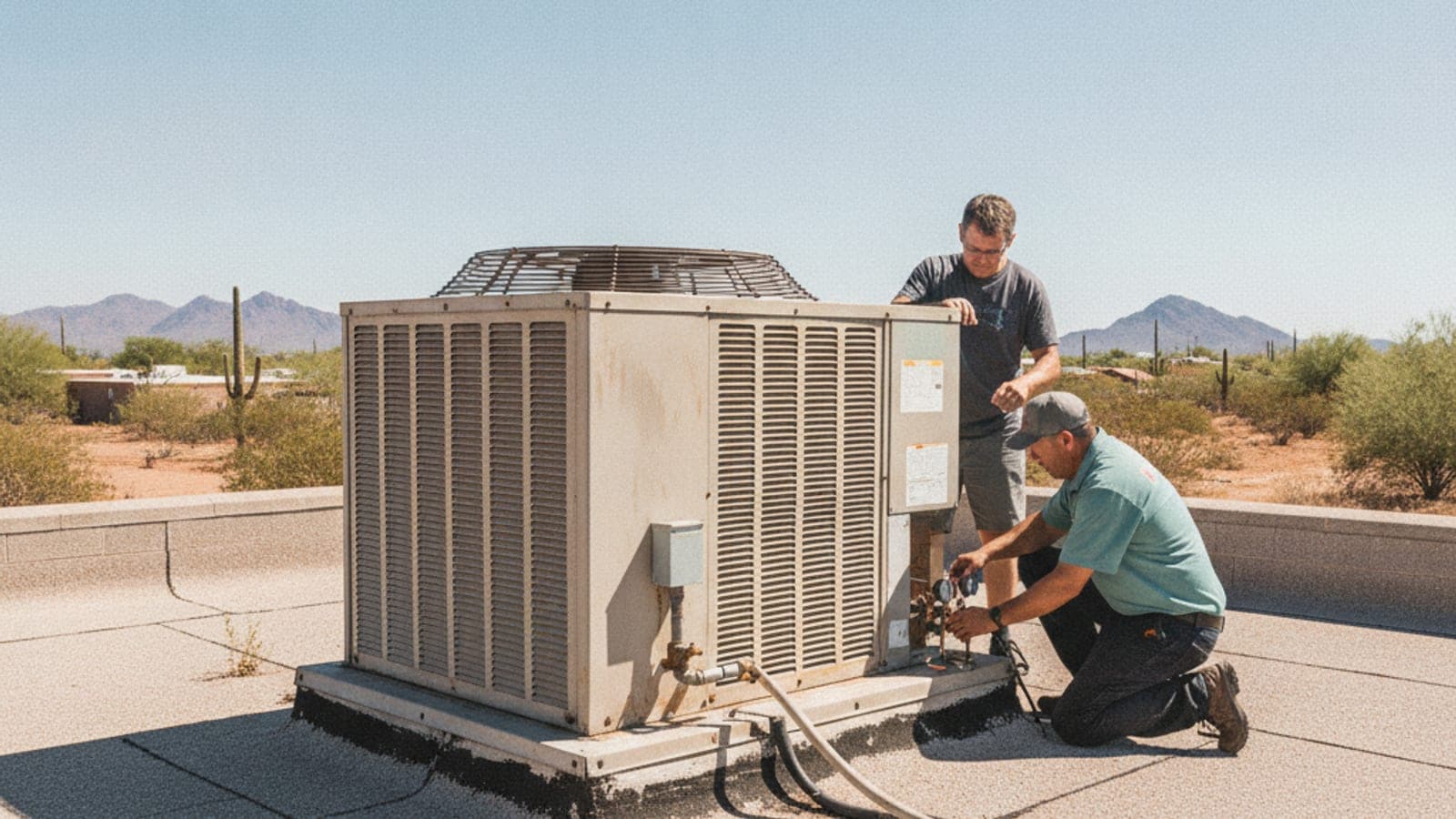
A banging or clanking AC usually traces to one of four things: a loose duct, debris in the blower, a loose mount or fan blade, or damage inside the compressor. A heavy bang from inside the outdoor unit means shut the system off at the thermostat and the breaker. Climate Pros Tucson matches you with a licensed pro to find which one it is.
What causes an AC to bang?
A loose duct hanger or expanding ductwork. Sheet-metal ducts expand as they warm and shrink as they cool. A single pop or thump at startup or shutdown, loudest at a register or in the ceiling, often points here. In a home with ducts in an attic or above a flat-roof ceiling, the sound can travel a long way.
Debris in the indoor blower. A missing or collapsed filter lets material reach the blower wheel. That produces a rhythmic clack that follows the fan.
A loose compressor mount or fan blade. A loose mount knocks the cabinet at start and stop. A bent fan blade ticks against its shroud once per turn. This is the outdoor unit, or the rooftop package unit if that is what your home has.
Internal compressor damage. A heavy, dull bang that doesn’t follow the fan, especially with grinding or metal sounds, means stop running the equipment. Running it can spread debris through the system.
When should you shut it off right away?
Turn the system off at the thermostat and the breaker if any of these are true:
- The bang is heavy and comes from inside the outdoor unit or rooftop unit
- You hear metal grinding under the bang
- The unit shakes more than it used to
- You smell something burning
- The banging started suddenly while the system was running
If it is a single soft thump on startup and shutdown and the home cools normally, you can usually keep running it until the pro arrives. Ask the pro to confirm timing. Climate Pros Tucson doesn’t set arrival times.
On a day over 100F, shutting down is a real cost, and Tucson averages about 68 of those days a year at the airport. Heat is the reason to call quickly. It is not a reason to keep running a unit that is banging hard.
How do you narrow it down safely?
- Locate the sound. Stand by the outdoor unit, then near a supply register, then by the air handler or furnace closet.
- Time it. One thump on startup suggests ductwork. A rhythm that follows the fan suggests a blade or debris. Continuous heavy banging suggests the compressor.
- Look at the outdoor unit with the power off. Check for a bent blade, debris, or a cabinet that moves when you push it. Don’t climb onto a hot flat roof to inspect a package unit. Tell the pro instead.
- Check the filter with the power off. Replace one that is missing or collapsed.
- Stop there. Compressor diagnosis needs meters and gauges.
What should the pro tell you?
Ask the pro to name the failed part, say whether repair or replacement makes sense, and explain access to the roof or outdoor unit. Ask for the diagnostic fee as a dollar figure. A bang at startup that comes with a slow, struggling start can be electrical rather than mechanical, and the guides on AC capacitor replacement and hard start kits cover two related electrical causes. For other sounds, see AC making a loud noise and AC squealing noise. If the repair quote is large, read repair or replace AC first.
Getting a banging AC looked at
For a banging AC, AC repair matching is one call away. Call (520) 353-2520 and we’ll match you with a licensed local pro. You can also browse the Tucson HVAC hub. Check any contractor’s license at roc.az.gov.