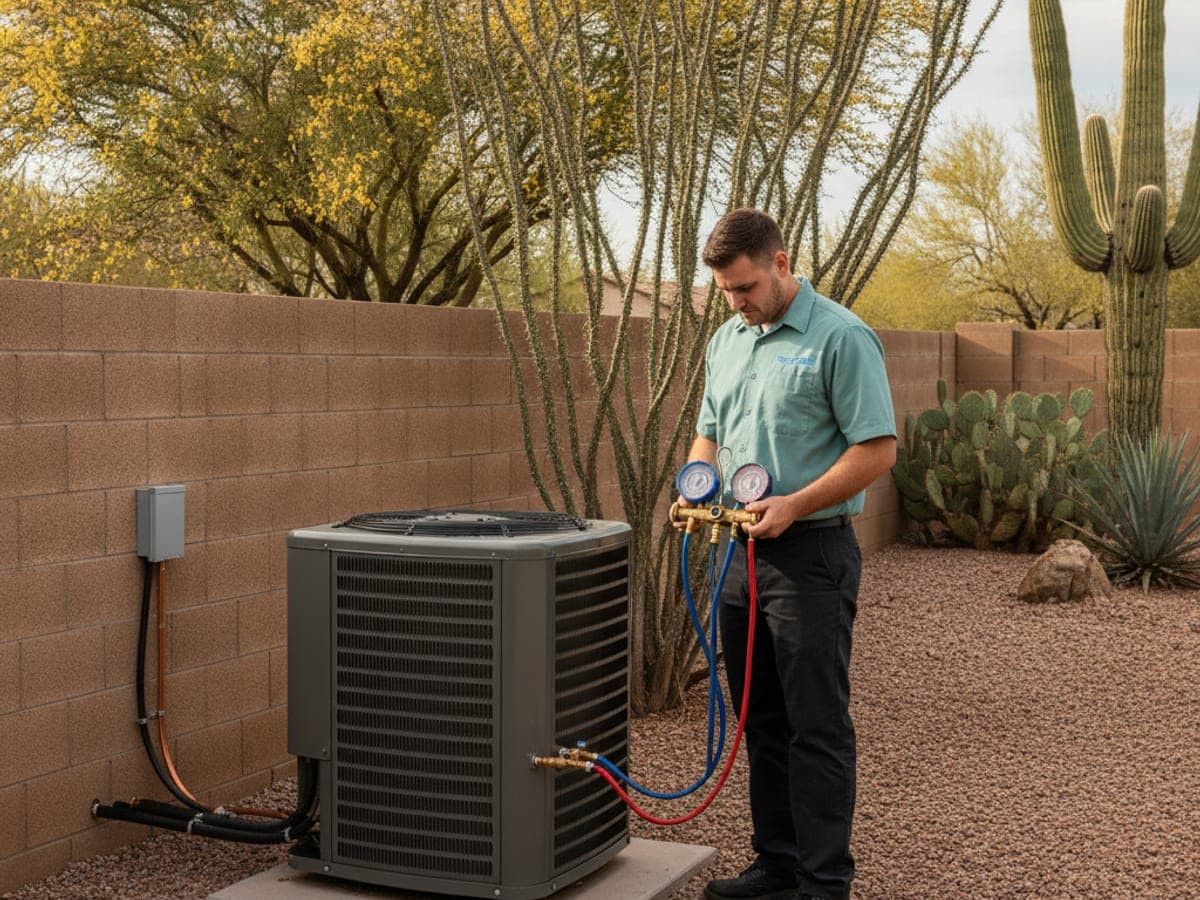
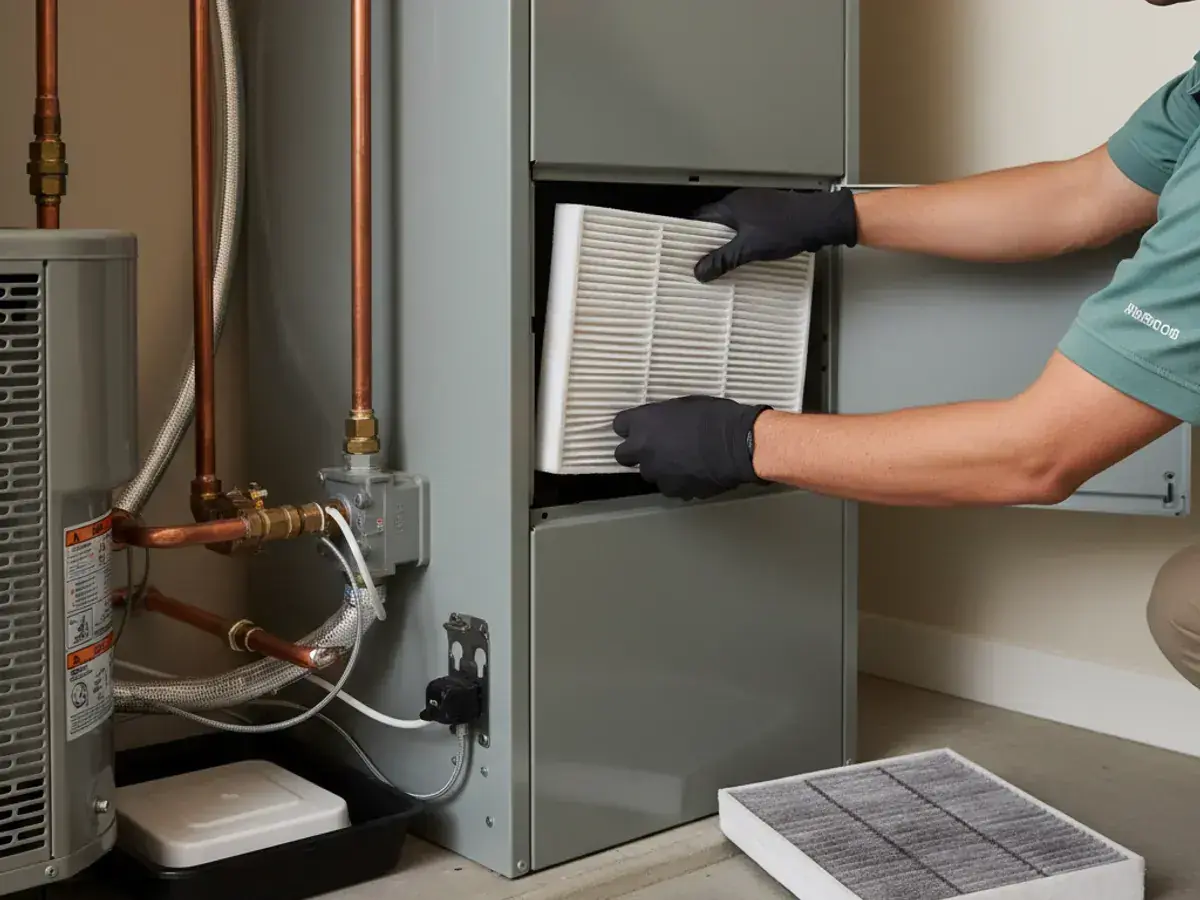
HVAC Maintenance for Downtown Tucson homes, through a licensed local company we match
you with. Downtown Tucson: Low valley floor beside the Santa Cruz River at about 2,400 feet, among the lowest ground in central Tucson. Full desert heat and the July and August monsoon humidity. HVAC maintenance in Tucson covers the cooling side before the heat and the heating side before the first cold nights.
What's different about HVAC maintenance in Downtown Tucson?
Recorded subdivision plats in Downtown Tucson have a median recording year of 1920 (Pima County plats). Older homes may carry an evaporative cooler alongside refrigerated air, so a maintenance visit can cover both, and leaky older construction lets in more dust. At about 2,400 feet, Downtown Tucson is valley-floor desert; Tucson International Airport averages about 68 days a year at or above 100F. Thick adobe and brick walls and flat roofs shape where equipment and line sets can go in the oldest houses here. HVAC maintenance in central Tucson often covers two systems: an evaporative cooler for the dry months and refrigerated air for the monsoon. Tucson Water says hard water builds calcium deposits in coolers and advises changing pads regularly and adding an in-line filter. A spring check before the first 100F day and a fall check after the monsoon fit the local calendar.
Downtown and the historic barrios hold the oldest recorded plats in the service area. Subdivisions here were recorded from 1897, with a median recording year of 1920 (Pima County plats). That covers El Presidio, Armory Park, Barrio Viejo, Barrio Anita, Dunbar Spring and Iron Horse, plus the newer apartments and lofts built in and around the core.
Thick adobe and brick walls change what's practical. Equipment placement and line-set routing can be tight on a narrow downtown lot, and many older homes here have flat roofs with a roof-mounted cooler or package unit rather than attic ducts. In homes like these, a ductless mini split or a small ducted system in one zone is often the cleanest route, and the company you're matched with will tell you what the walls and roof allow.
Downtown is inside the City of Tucson, so a new or replacement AC, heat pump or furnace needs a City permit with a load calculation. A new evaporative cooler needs one too. If you rent, the Arizona Attorney General has said Tucson rentals cooled by air conditioning may not exceed 82F in habitable rooms, or 86F with an evaporative cooler.
Neighborhoods and subdivisions in Downtown Tucson include Downtown, El Presidio, Armory Park, Barrio Viejo, Iron Horse, Dunbar Spring, Barrio Anita, Pie Allen, Barrio Santa Rosa, Millville.
What an HVAC maintenance job covers, and the signs a home needs one, are on our HVAC maintenance page. The company you're matched with
confirms the scope for your home in Downtown Tucson before any work starts.
What do Downtown Tucson homeowners ask about HVAC maintenance?
What does HVAC maintenance cost in Downtown Tucson?
Quoted per visit or per plan; the number of systems and the included work set the price. Climate Pros Tucson doesn't set prices; the contractor confirms the number for Downtown Tucson before any work starts.
How does Downtown Tucson's climate affect this service?
Low valley floor beside the Santa Cruz River at about 2,400 feet, among the lowest ground in central Tucson. Full desert heat and the July and August monsoon humidity. At about 2,400 feet, Downtown Tucson is valley-floor desert; Tucson International Airport averages about 68 days a year at or above 100F.
My adobe house in Barrio Viejo has no ductwork. How do I add cooling?
Most companies start with ductless options in a home like that: a mini split head in each room that needs it, with the outdoor unit placed where it's least visible. Thick walls make line-set routing a real part of the job, so expect the pro to look at the walls and roof before quoting. Tell us the address and we'll match you with a licensed company that does this kind of retrofit.
Can I keep my roof evaporative cooler and add refrigerated air?
Yes. Some Tucson homes run both: the cooler for the dry months and refrigerated air when the monsoon raises the humidity. The pro will check whether the roof and the existing cooler duct can share a system or whether a separate mini split is simpler. A new cooler needs a City permit; a replacement cooler isn't listed as needing one.
Is there anything special about HVAC work on an older downtown building?
Access and placement drive the job. Narrow lots, shared walls and roof access affect where equipment can go, and a historic building may have its own review. Ask the company you're matched with how they'll route the lines and where the condenser or package unit will sit before you sign.
Service area
Where we cover Downtown Tucson
Serving Downtown Tucson
Need HVAC maintenance in Downtown Tucson?
We match you with a licensed local HVAC pro for your repair or replacement.