Hose off the outdoor coil after monsoon dust
The outdoor unit has to dump your home’s heat into air that is often over 100°F. Dust packed in its fins makes that job harder.
What to watch for: Watch through the rinse. He also shows the lid coming off, and says most homeowners will skip that part. Skip it: the fan wires stay attached to the lid.
Why does this matter in Tucson?
Tucson International Airport averages about 68 days a year at or above 100°F (1991-2020 normals). On those afternoons the condenser is rejecting heat into very hot air, so a coil choked with dust, cottonwood fluff or leaf litter loses the margin it needs.
Monsoon storms bring the dust. A gentle rinse once the storms quiet down, and again before the next summer, keeps air moving through the fins. If you'd rather hand it off, TEP's Efficient Home Program listed an outdoor coil cleaning rebate inside its AC tune-up offer (up to $40, as listed by TEP in October 2026) through participating contractors. Amounts change, so confirm with TEP or the contractor.
What you'll learn
- How to shut off power at the outdoor disconnect before you touch anything
- Why a garden hose is enough and a pressure washer does damage
- Which part of the job to leave alone (the lid, the fan and the wiring)
- Why roof package units are a call for the pro, not a ladder project
How do you do it, step by step?
- Set the thermostat to Off.
- At the gray disconnect box on the wall next to the outdoor unit, pull the disconnect block out or flip its switch to Off. If there is no disconnect, turn off the AC breaker at the main panel.
- Clear leaves, trash and weeds from around the unit and off the top grille by hand.
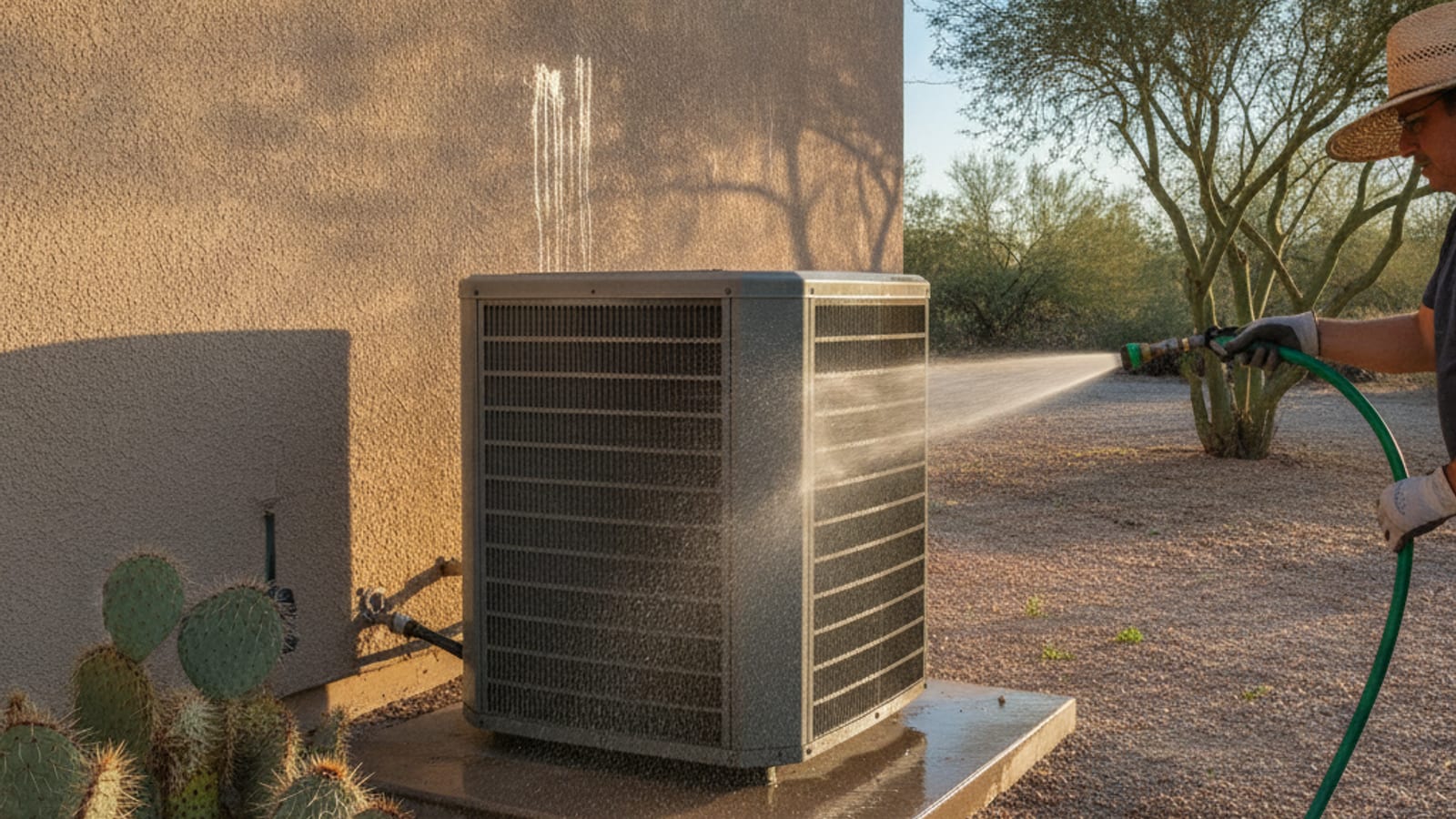
- With a garden hose on a gentle spray, rinse the fins from the top down, aiming straight into the fins, not across them.
- Work around all sides. Dirty water running out the bottom is what you want to see.
- If the fins are greasy or matted, a foaming coil cleaner sold for outdoor AC coils is optional. Follow the can label and rinse it off fully.
- Let the unit drip dry for a few minutes, restore power at the disconnect and set the thermostat back to Cool.
When should you stop and call a pro?
- Fins are flattened over large areas, or the coil is leaking oil.
- The fan blade is cracked, wobbles or doesn’t spin when the unit is running.
- The unit is a package unit on the roof. Look at it from the ground only and let the pro handle it.
Leave the top on. The fan motor is wired into the lid, and the panel behind the service cover holds a capacitor that can store a charge even with the power off. That part is for a licensed pro.
Read next
Sources and official pages
Rather have a pro handle it?
Climate Pros Tucson matches homeowners with licensed local HVAC pros across the Tucson area. You talk to us, then to the pro, and the pro quotes the job before any work starts.
What else can you check yourself?
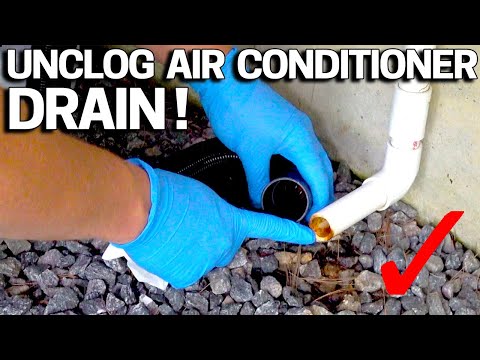
Clear a clogged AC condensate drain
Monsoon humidity makes your AC pull more water out of the air. If the drain line is slow, that water ends up in the pan, the ceiling or the closet floor.

Set your thermostat around TEP's peak hours
If you're on a TEP time-of-use plan, when you cool matters as much as how much. The summer weekday peak is 3 to 7 p.m.

Reset a tripped AC breaker, and what not to touch
When the AC goes silent, a tripped breaker is a fair first check. One reset is fine. A breaker that trips again is telling you to stop.