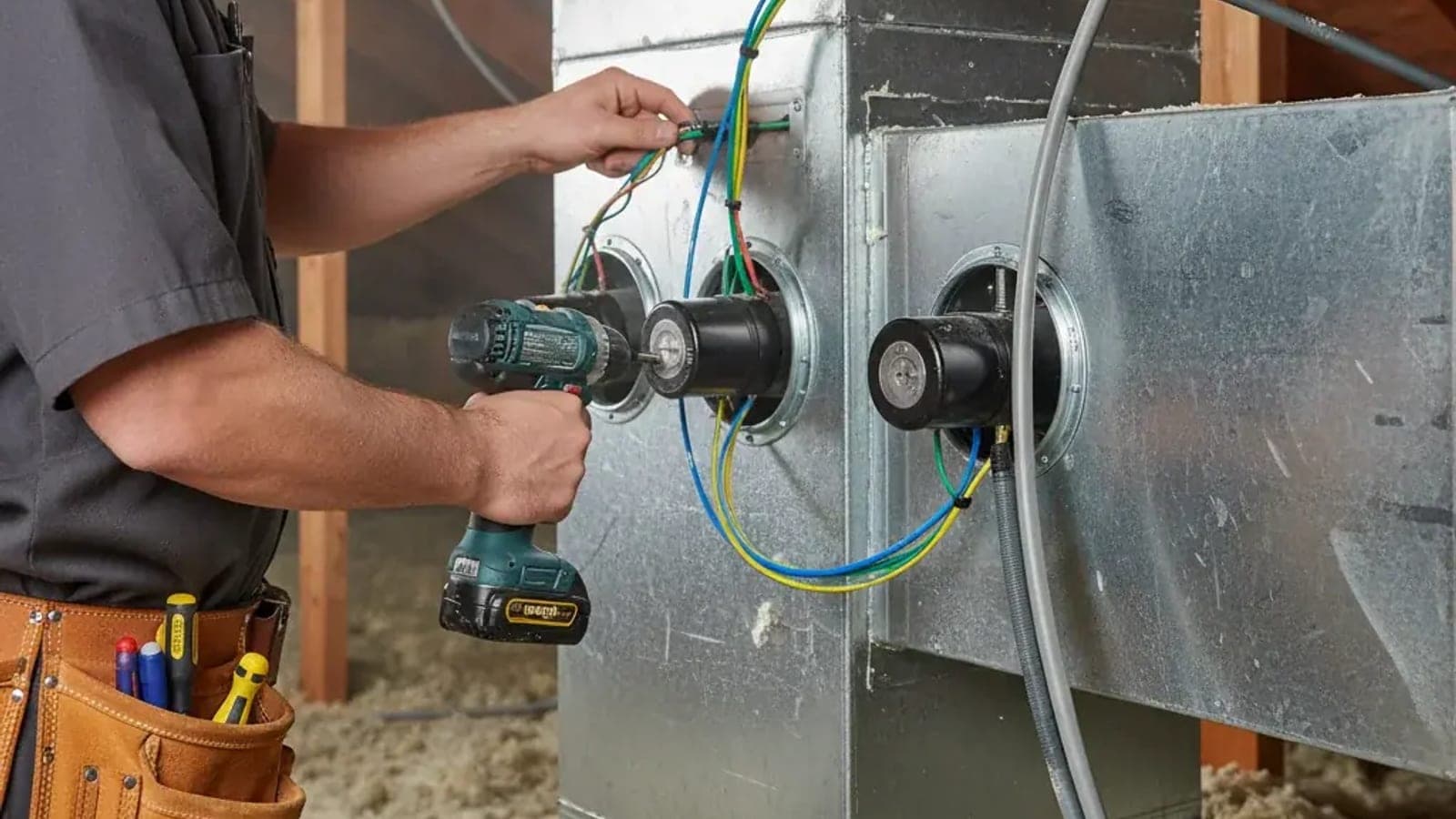
Zoning splits one ducted system into areas, each with its own thermostat and a motorized damper in the ductwork. It can fix a house where one side runs hot while another runs cold. It doesn’t fix poor ducts or an undersized system. Climate Pros Tucson matches you with a licensed pro to check which problem you have.
How does zoning work?
Dampers open and close in the ducts based on what each thermostat calls for. The single system then sends air where it’s needed. It suits a ducted home with a clear divide, such as a sunny side and a shaded side, or two floors.
When does zoning help in Tucson?
- A west-facing room that bakes in the late afternoon while the rest of the house is comfortable
- A two-story home where upstairs runs hotter than downstairs
- A house with a wing or addition on the same system
- Rooms used at different times, such as a guest room
Tucson’s heat is the reason the problem shows up. The airport averages about 68 days a year at or above 100F, and the City of Tucson’s summer design temperature is 105F, so rooms with big sun exposure suffer first. See why upstairs is hotter in Tucson and bedroom too hot.
When is zoning the wrong fix?
Check the ducts first. ENERGY STAR says a typical forced-air house can lose about 20% to 30% of the air moving through ducts to leaks and poor connections. That is a national figure, not a Tucson measurement. Leaky or undersized ducts make a hot room hot no matter how many dampers you add. Airflow balancing can sometimes solve the same problem with no new controls at all. See HVAC air balancing.
Zoning is also a poor match when the system is too small for the house, when the equipment is a single-stage unit that can’t handle closed dampers without a plan for the extra air, or when the problem room has no duct run at all.
What are the alternatives?
For one problem room, a mini split can serve it on its own without touching the main system. See multi-zone mini splits. Closing vents in unused rooms is a common shortcut, and should I close vents in unused rooms explains why it can backfire.
What should you ask a pro?
| Question | Why it matters |
|---|---|
| Is the problem duct design, airflow or capacity? | Zoning only fixes one of those |
| How does the equipment handle closed dampers? | Single-stage units need a plan |
| How many zones and where do the thermostats go? | More zones add cost and complexity |
| Is a load calculation included? | The City of Tucson requires one for new and replacement equipment |
| What does a new system cost with and without zoning? | Compare in dollars on the same scope |
Climate Pros Tucson doesn’t set prices. If you’re replacing the system anyway, that’s the easiest point to add zoning. If you’re keeping the current equipment, read adding zones to an existing ducted system for what a retrofit asks of the blower and ducts.
When to call us
For zoning questions, AC installation and thermostat installation are the services to start with. Call (520) 353-2520 and we’ll match you with a licensed local pro. You can also visit the Tucson HVAC hub. Check any contractor’s license at roc.az.gov.