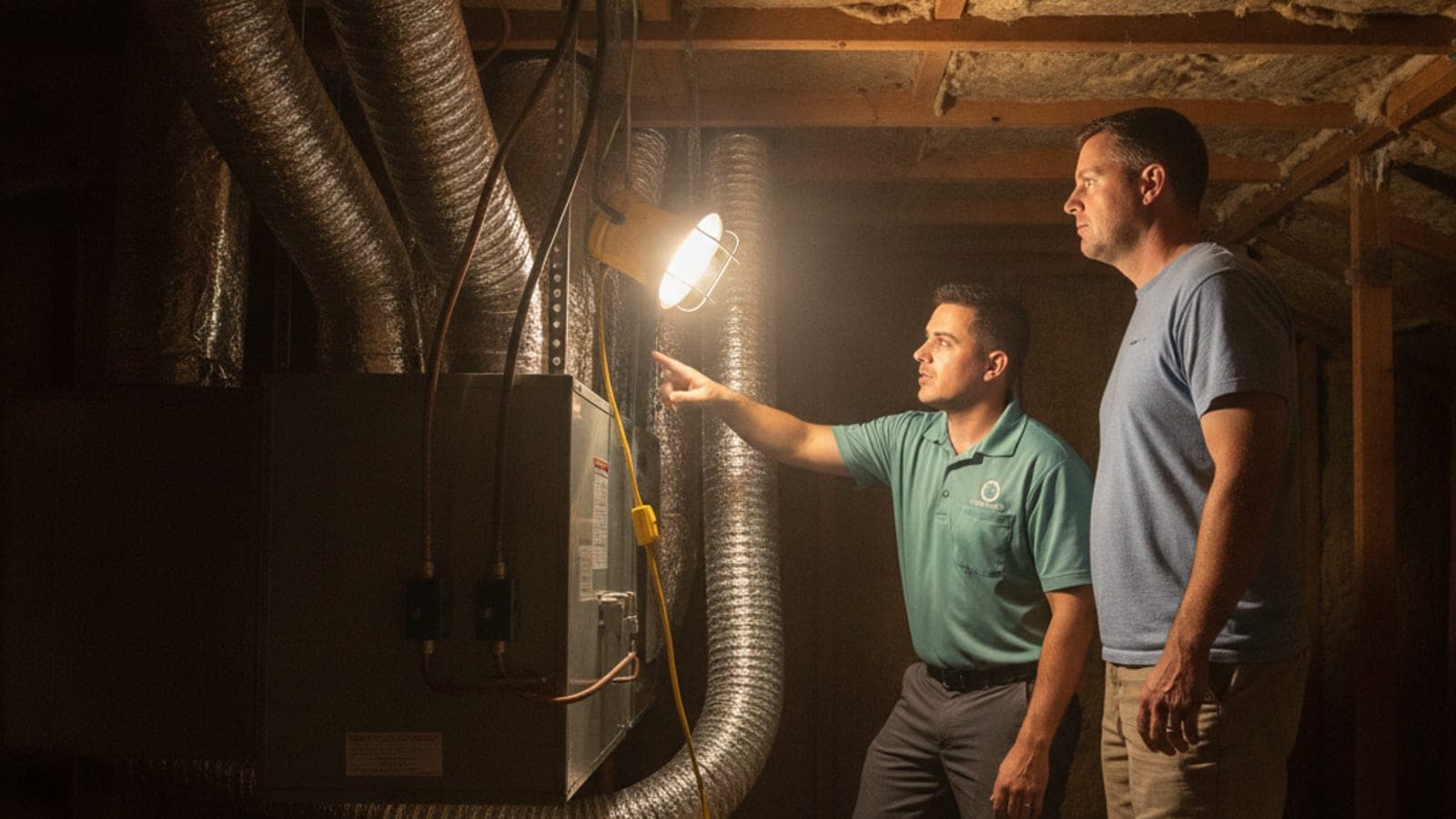
Can a heat pump work with your existing ducts?
Sometimes, and a pro has to measure to know. A heat pump moves a lot of air, and ducts built for an older system may be too small, too long or too leaky for it. If they are, the new unit runs noisy, strains the blower and may not heat or cool the way it should. Measure first, then decide. Climate Pros Tucson matches you with a licensed pro who can take those measurements.
What are the signs of undersized ducts?
- Loud air at the registers, or a whistle.
- Weak flow from some rooms and strong flow from others.
- A system that runs long but can’t hold temperature.
- A blower that sounds like it’s working hard.
- Rooms at the end of a long duct run that stay hot or cold.
These signs also fit leaks, dirty filters and a closed damper, so a pro should test before blaming size. See should I close vents in unused rooms.
How does a pro check?
A pro measures airflow and the pressure the blower works against, often called static pressure. They compare that with what the equipment needs. They also look at duct size, length, bends and where the ducts run. A load calculation is part of this. The City of Tucson requires load and sizing calculations for new and replacement HVAC equipment.
Why do Tucson ducts need extra attention?
Ducts that run through a hot attic or across a flat roof sit in summer heat that works against them. The City of Tucson’s code lists a summer design dry bulb of 105F, and the airport averages about 68 days a year at or above 100F. ENERGY STAR says a typical forced-air house can lose about 20% to 30% of its duct air to leaks, holes and poor connections. That is a national figure, not a Tucson measurement. A leaky, undersized duct system hurts a heat pump the same way it hurts an AC.
What are your options?
- Seal the ducts. Fixing leaks is often cheaper than replacing ducts. TEP’s Efficient Home Program listed duct sealing up to $300 as of October 2026, varying by leakage reduced. Confirm with TEP. See duct leak repair in Tucson.
- Modify or add duct runs. A pro can enlarge a trunk or add a return.
- Choose a smaller or lower-airflow system. A pro can match equipment to what the ducts can carry.
- Go ductless for the problem rooms. See concealed ducted mini splits.
- Replace the ducts. This is the biggest job, and sometimes the right one. HomeGuide lists $1,400 to $5,600 to replace ductwork, or $25 to $55 per linear foot, as national figures (checked October 2026). That’s not a Tucson price. The written quote from the pro is the number that counts for your home.
Does the panel matter too?
Yes, a heat pump also needs the right electrical capacity. Read heat pump and a 100-amp panel.
What should you ask a pro?
- Did you measure airflow and static pressure, or are you guessing?
- What size does this heat pump need, and what do my ducts support?
- What would you fix first, and what does each fix cost, as a dollar figure?
- Will the work need a permit? The contractor pulls it.
- Is this a participating Efficient Home contractor?
For the install process, see heat pump installation day in Tucson. For services, see heat pump service and mini split installation. The Tucson HVAC hub lists the areas we cover.
Have the ducts measured
If you’re planning a heat pump and aren’t sure your ducts can carry it, a licensed pro should measure them first. Call (520) 353-2520 and we’ll match you with a licensed local pro.